
PRODUCTS / COMPONENTS / FILTERS /
Lumped Element Filters
A lumped element filter is built from discrete inductors and capacitors rather than distributed resonant structures. Because these elements are smaller than the wavelength at lower frequencies, lumped element filters can achieve significantly smaller package footprints than cavity filters at the same frequency making them the preferred wherever size and weight are important.
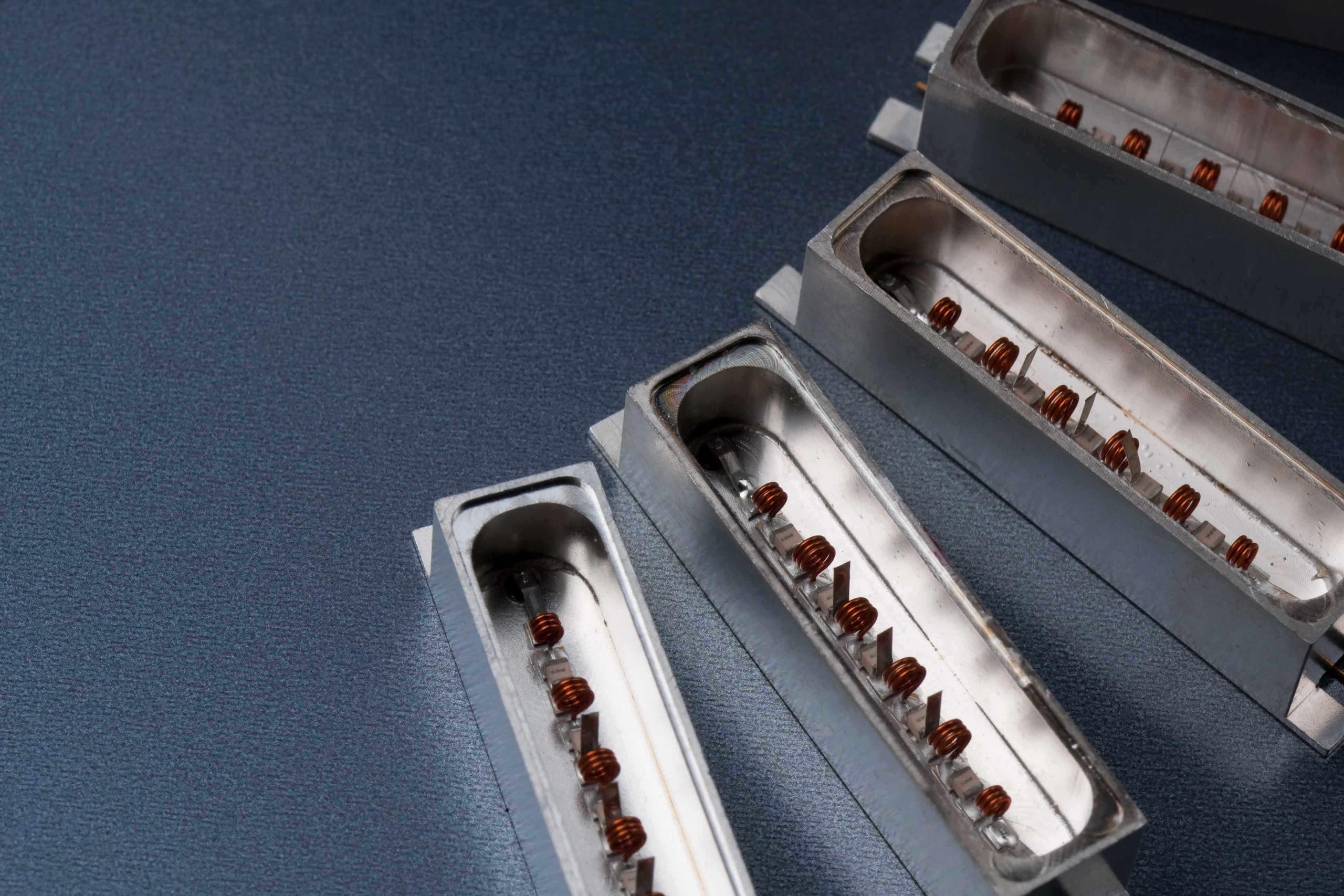
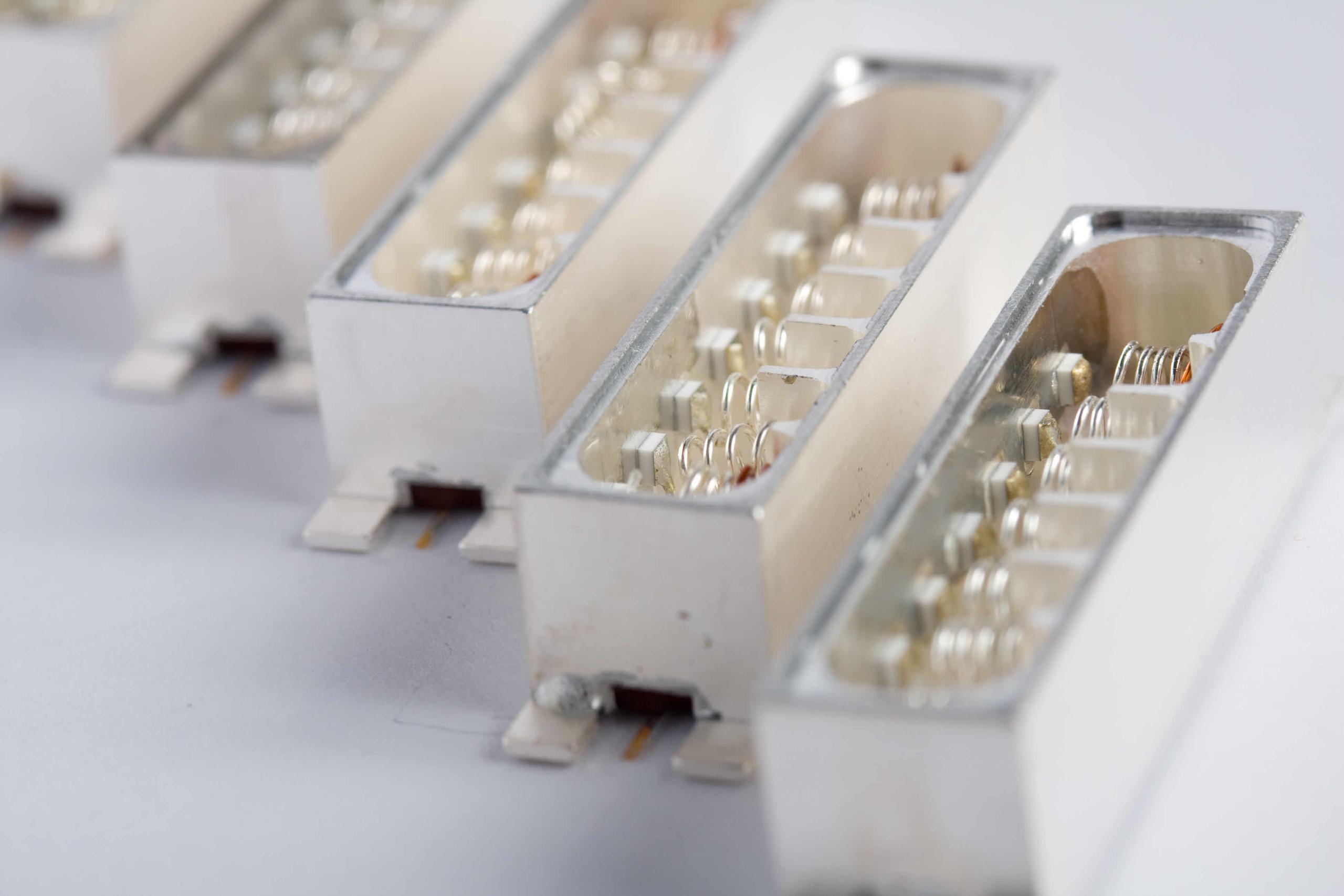
Spectrum Control's superior low loss (0.1 dB) lumped element designs are ideal for applications where size and weight (SWaP) are critical. Our filter engineers are experts in lumped element design techniques and include a wide range of innovative design methods to meet today's demanding specifications.
Explore our Filter Customization Tool to optimize your demanding filter requirements.
Key Performance
|
Feature
|
Specification |
|
Frequency
|
10 MHz to 3 GHz |
|
Size
|
Small |
|
Cost
|
Low |
|
Harmonics
|
No spurious passbands |
|
Power Handling
|
Typically Up to 100 Watts |
|
Insertion Loss
|
As low as 0.1 dB |
Lumped Element Advantages
- Lightweight
- Lower insertion loss
- Integral shielding for improved isolation
- Can utilize strategically placed poles for maximum rejection
How Lumped Element Filters Work
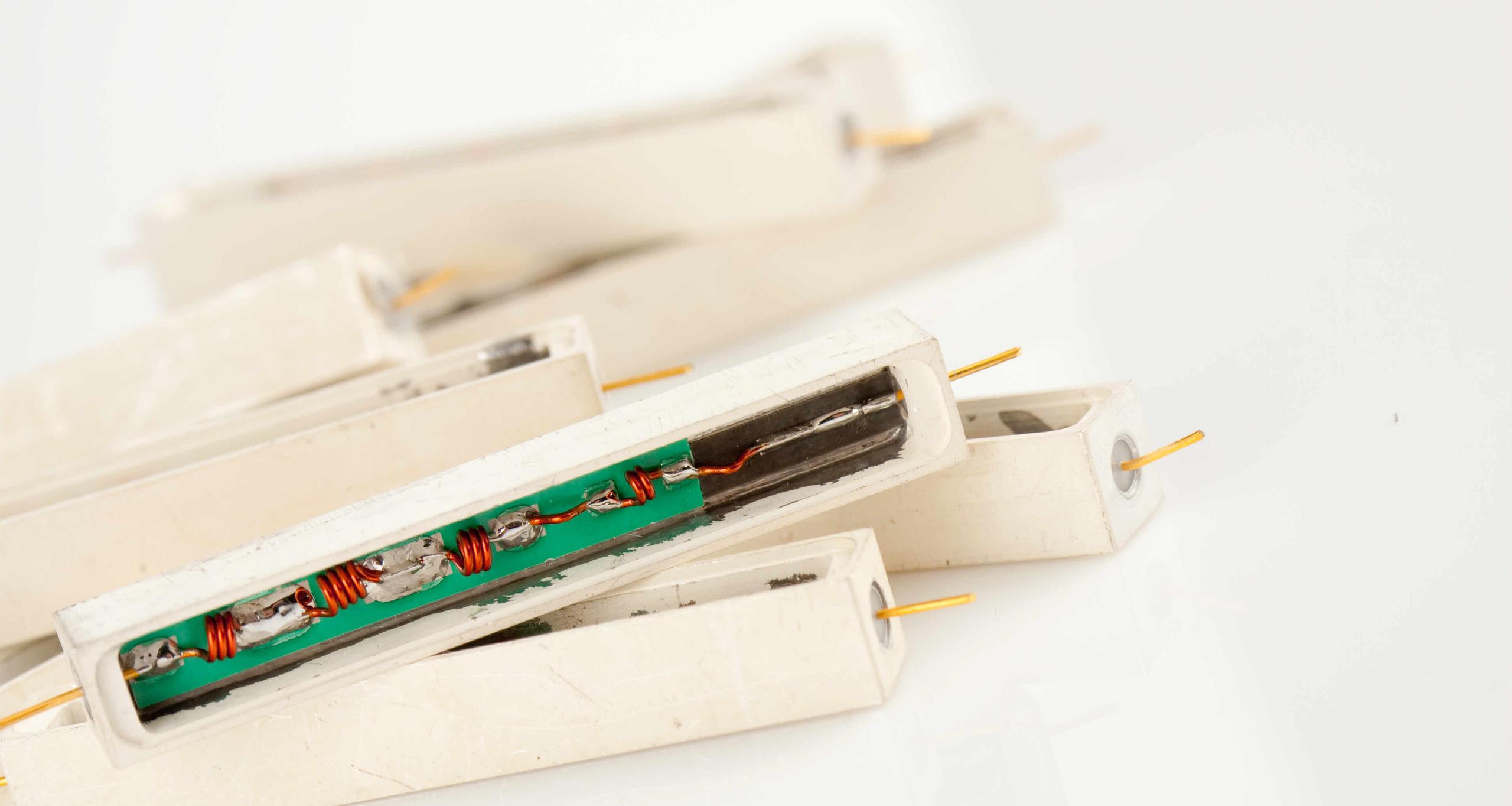
Below 1000 MHz, wavelengths are relatively long. Distributed-element filters, such as cavity filter designs, must be sized to at least a fraction of the operating wavelength, which makes them larger. Because discrete elements such as capacitors and inductors are smaller than the operating wavelength, lumped-element filters can achieve a smaller footprint at these frequencies than distributed-element alternatives.
This smaller-than-a-wavelength dimensioning also means that lumped-element filters avoid the spurious passbands, harmonic passbands, and responses that can affect distributed-element designs, resulting in a cleaner overall response. They can also achieve very wide fractional bandwidths.
Easy to tune.
Lumped-element filters are relatively easy to tune by adjusting poles using air-spaced inductive coils. This translates to shorter assembly times, lower labor costs, and, consequently, a lower overall price.
Lower Cost, high customizability
Lumped-element filters are relatively easy to tune by adjusting poles using air-spaced inductive coils. This translates to shorter assembly times, lower labor costs, and, consequently, a lower overall price.
How Lumped Element Filters Compare to Other Topologies
 |
Lumped Element Filters: Discrete components; smallest footprint below ~3 GHz; lowest cost; widest fractional bandwidth range; up to 100W power handling. |
|
Cavity Filters: Distributed-element design; highest power handling (up to 400W) and Q; larger footprint, scales with wavelength. |
|
Ceramic Filters: Compact ceramic resonators as small as 2mm; strong middle ground on size and performance. |
|
SAW Filters: Smallest footprint of common topologies; typically used above the lumped-element frequency range. |
Applications
-
SWaP-constrained platforms
-
Airborne and portable defense systems where size, weight, and power are primary design drivers
-
Systems requiring multiple filter topologies integrated into a single package for broad frequency coverage
Cost-Sensitive Commercial Systems
Ideal for applications where standard off-the-shelf components and lower machining costs are important, as well as designs requiring frequent tuning or rapid customization during development.
Available Across Filter Functions
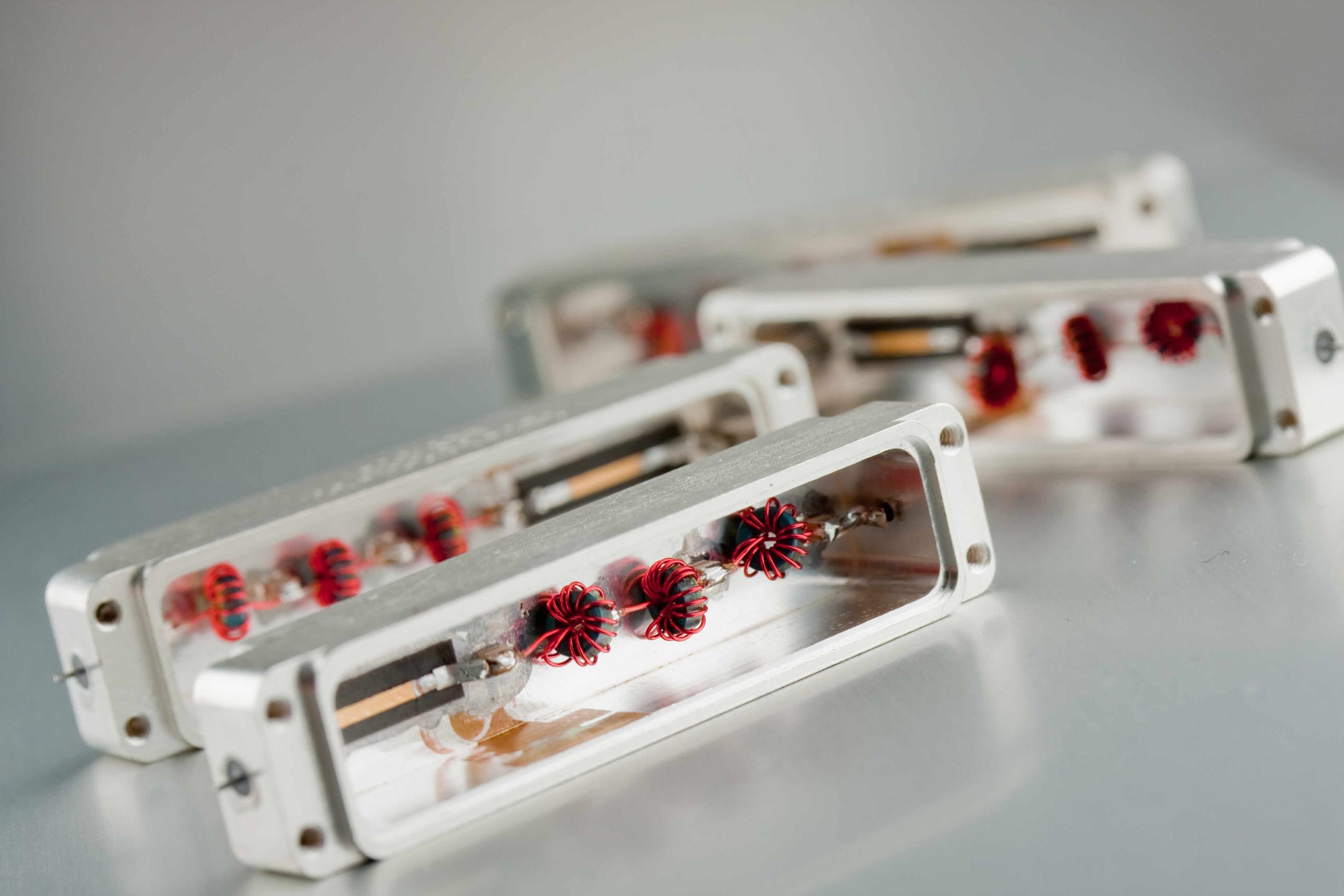
- Lumped Element Bandpass Filters
- Lumped Element Lowpass Filters
- Lumped Element Highpass Filters
- Lumped Element Notch Filters
Explore our Filter Customization Tool to optimize your demanding filter requirements.