
PRODUCTS / COMPONENTS / FILTERS /
Ceramic Filters
Spectrum Control ceramic filters deliver exceptional low-loss performance in a cost-effective design. With insertion loss as low as 2 dB and rejection up to 50 dB, these industry-leading filters provide superior performance at competitive pricing. The combination of high rejection and affordable cost ensures customers receive a solution that outperforms alternative offerings without exceeding budget requirements.
Visit our Ceramic Filter Customization Tool today to optimize your demanding filter requirements.
Design Capabilities
 Gold plating improves solderability and corrosion resistance
Capacitive coupling arrays enhance reliability and repeatability
Ceramic resonators as small as 2 mm (0.0787")
Lead-free solders (e.g., SN96, SAC305) for RoHS compliance
Mixed topologies integrated in a single filter design
4-pole ceramic filter with integrated bias-T for downstream power
High-rejection ceramic filters (e.g., 6-pole, 2100 MHz, <3:1 shape factor)
GPS L1/L2 diplexers with 30 dB isolation in a <0.500" sq., 0.125" high package
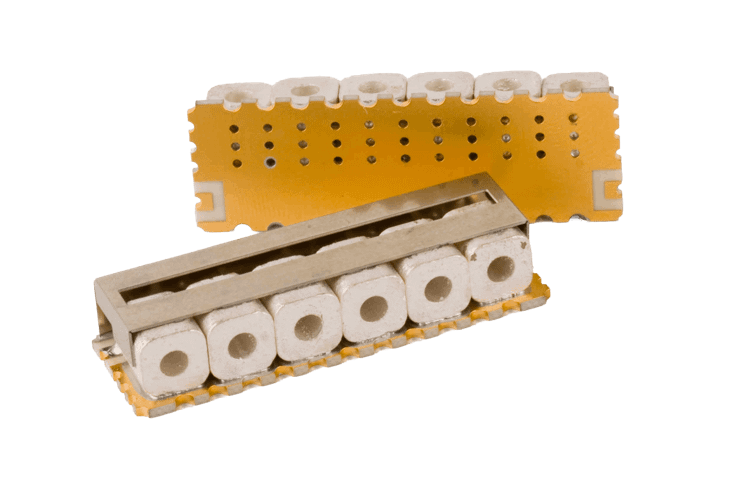
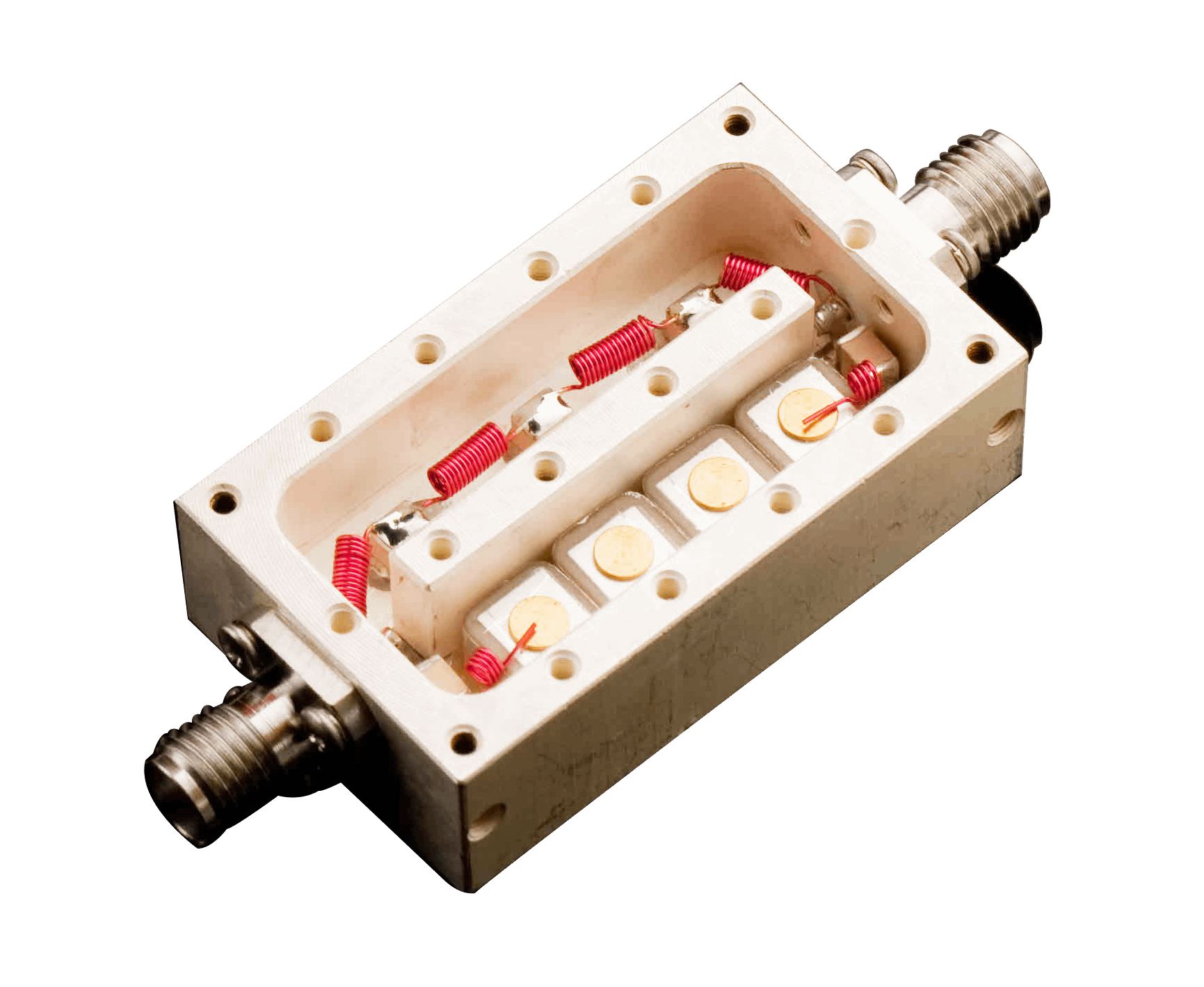
Spectrum Control high-complexity, 6-pole, low-loss design.
|
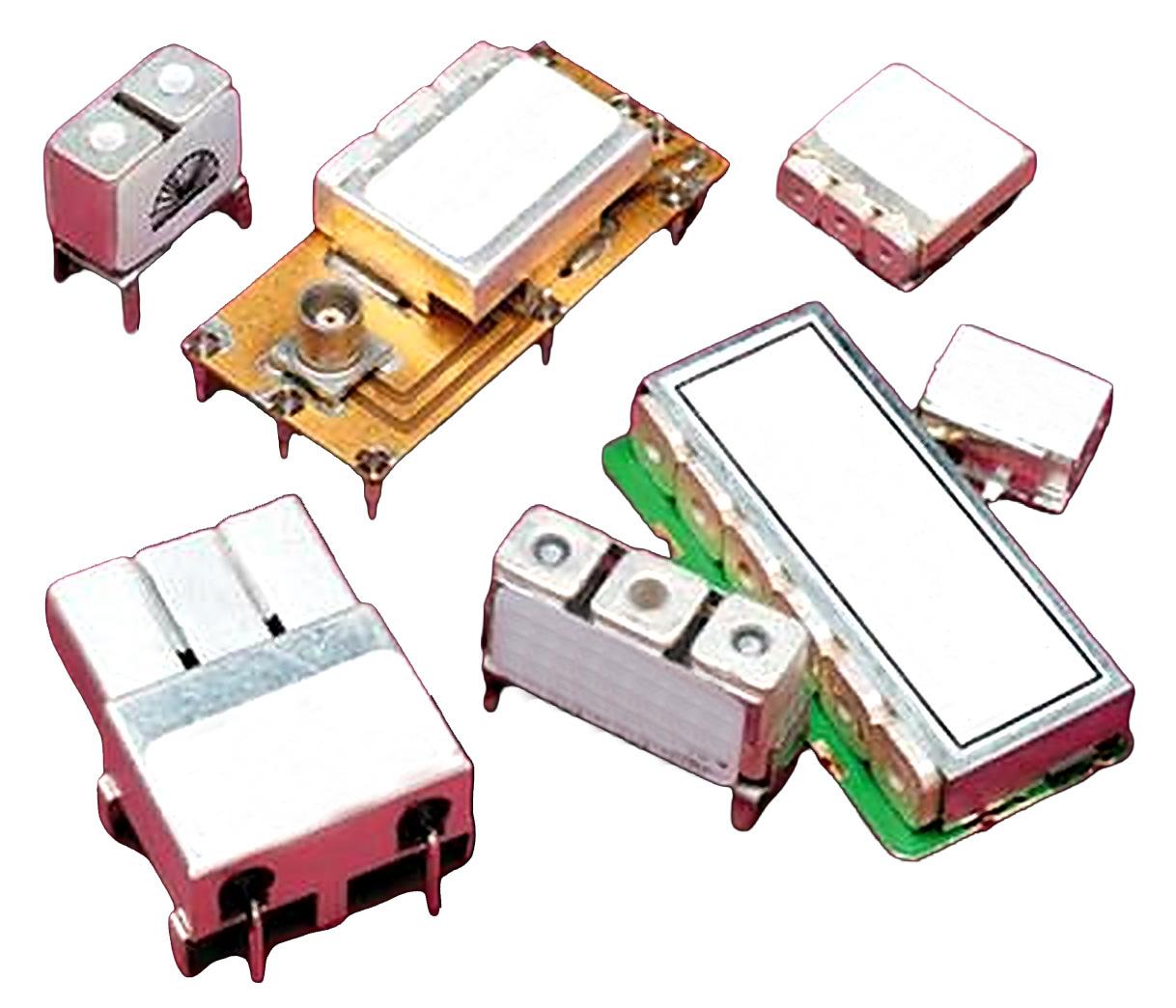
Spectrum Control offers a wide range of discrete ceramic resonator bandpass filters with bandwidths from 1% to 10%, delivering excellent insertion loss performance across 400 MHz to 6 GHz. These designs are available in open-frame or sealed configurations for high-reliability applications. |
 |
 |
Spectrum Control’s expertise in ceramic bandpass filters focuses on high-Q designs. An example is a GPS L1/L2 diplexer with 30 dB isolation in a package measuring less than 0.500" square and 0.125" high. Achieving this level of performance is challenging due to the close proximity of the L1 and L2 bands, which requires sharp skirts to prevent channel interference. This design delivers high isolation while maintaining low insertion loss. |
|
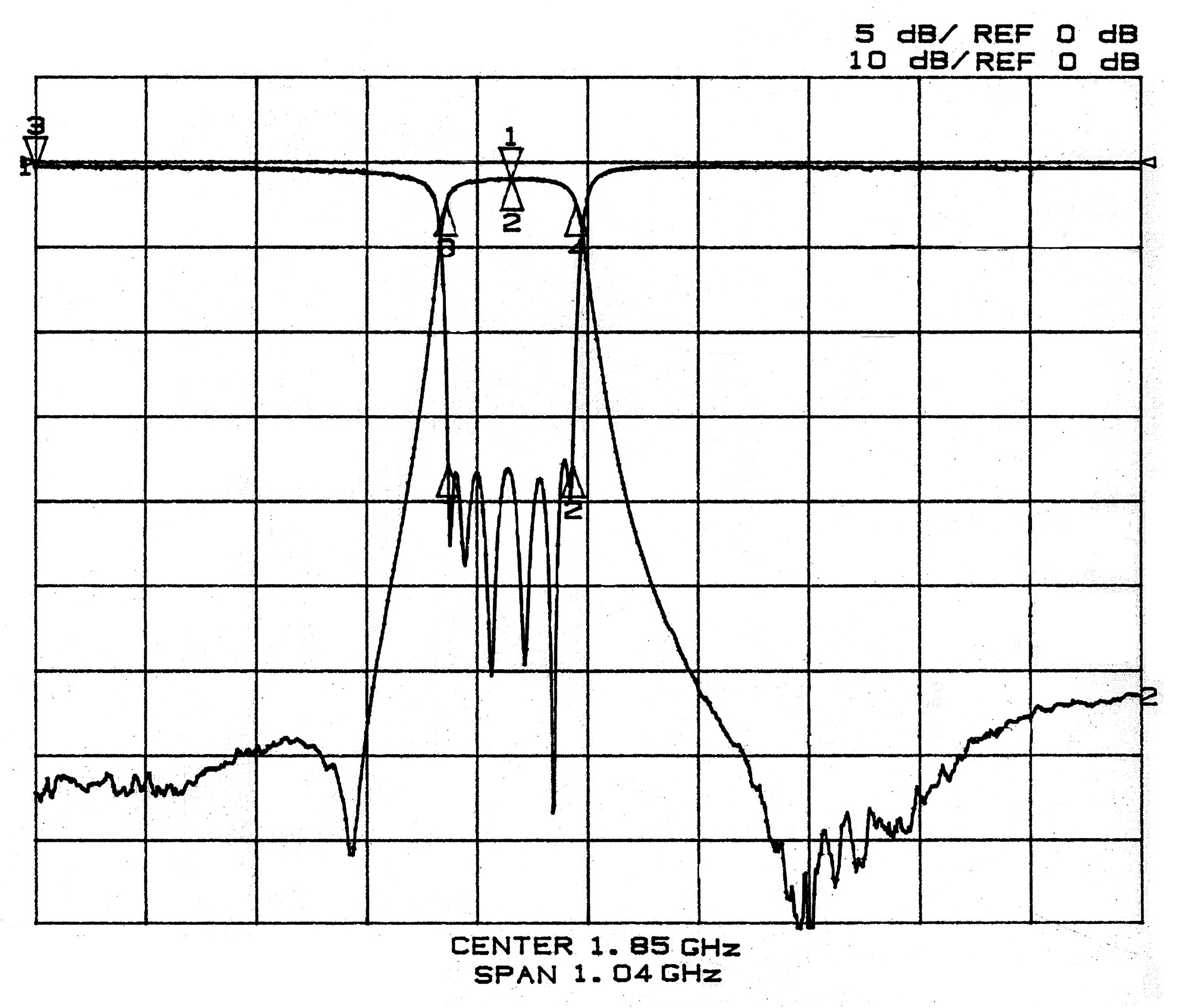
High-complexity ceramic filters, such as this 6-pole, 2100 MHz design with 45 dB rejection and a shape factor of less than 3:1, exemplify the performance achievable at Spectrum Control. To achieve this level of selectivity, designers often use Chebyshev responses to reduce insertion loss or incorporate cross-coupling to sharpen transitions near the passband edges. |
 |
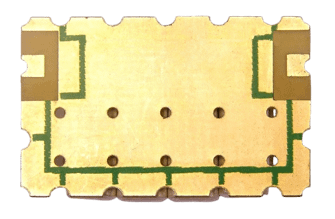 |
Spectrum Control bandpass filters use gold plating, offering superior solderability and corrosion resistance compared to other finishes. Gold provides excellent surface planarity and bonding reliability that alternative finishes cannot match. Other metals can introduce surface irregularities that create parasitic inductance, potentially shifting center frequency or degrading overall rejection. |
|
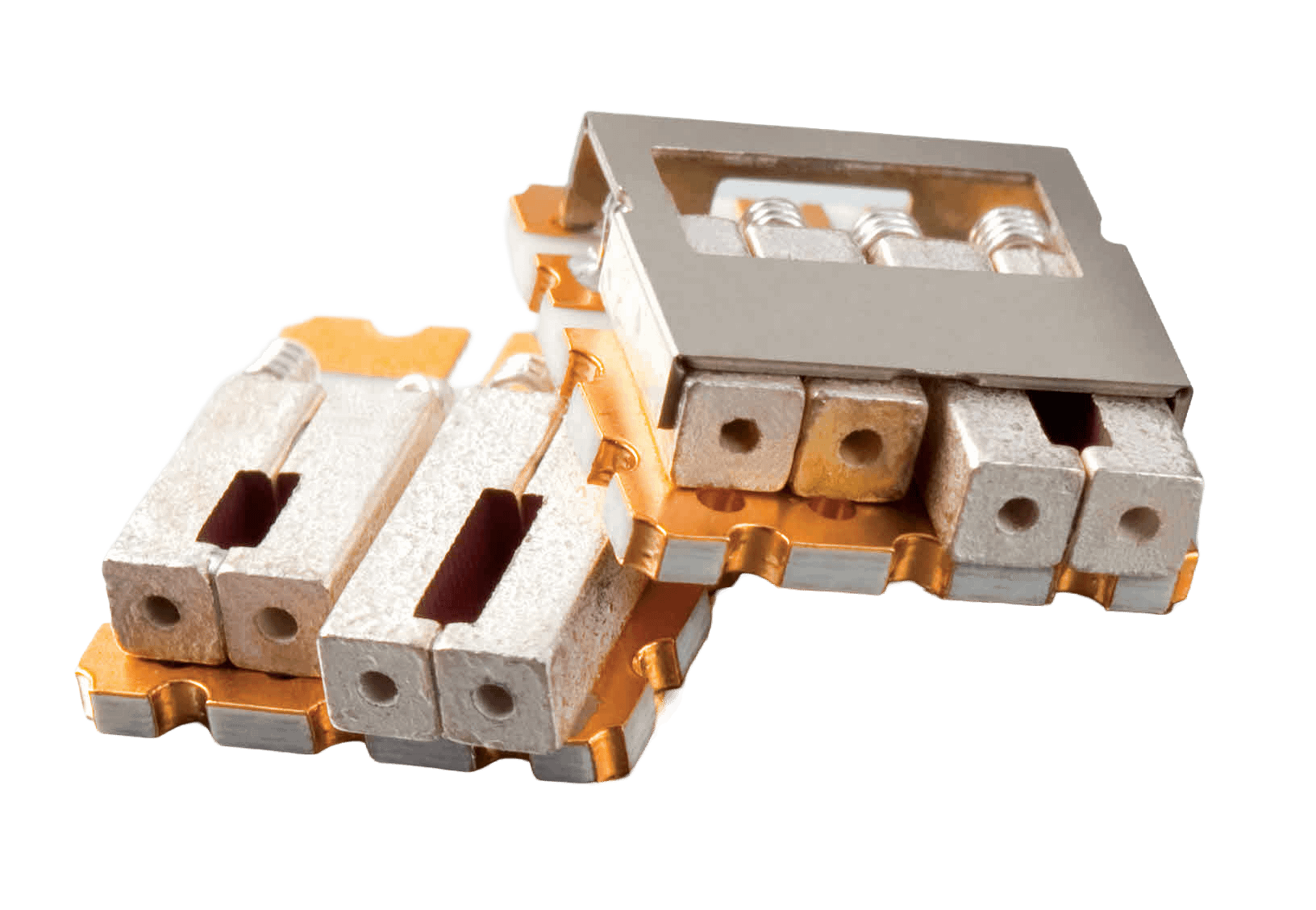
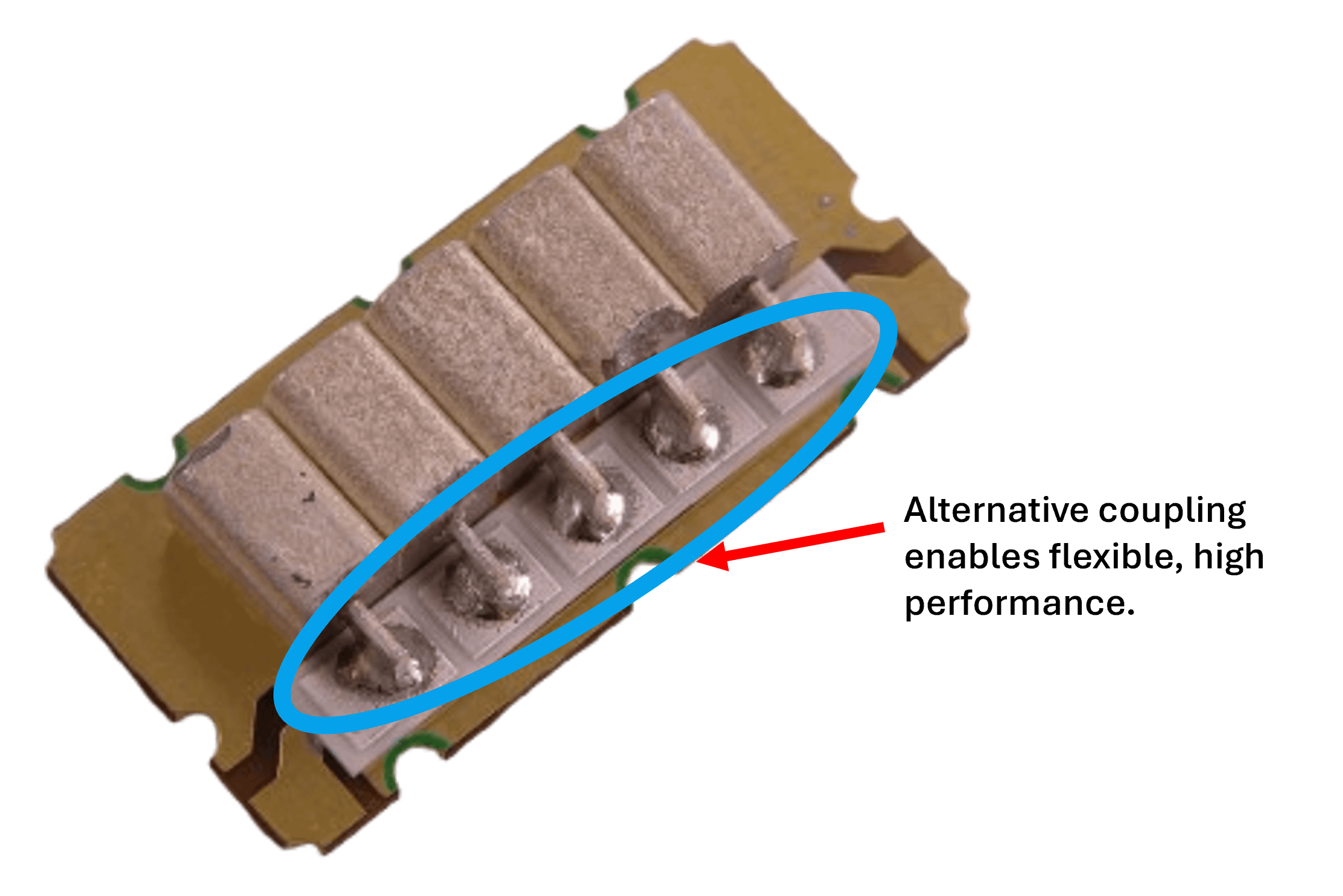
Spectrum Control engineers incorporate alternative coupling structures in ceramic bandpass filters, including capacitive coupling, to achieve fractional bandwidths of 20% or more. This approach improves roll-off and reduces low-side image responses in the receiver chain. Capacitive coupling can also deliver up to a 0.2 dB improvement in insertion loss compared to inductive techniques. |
 |
 |
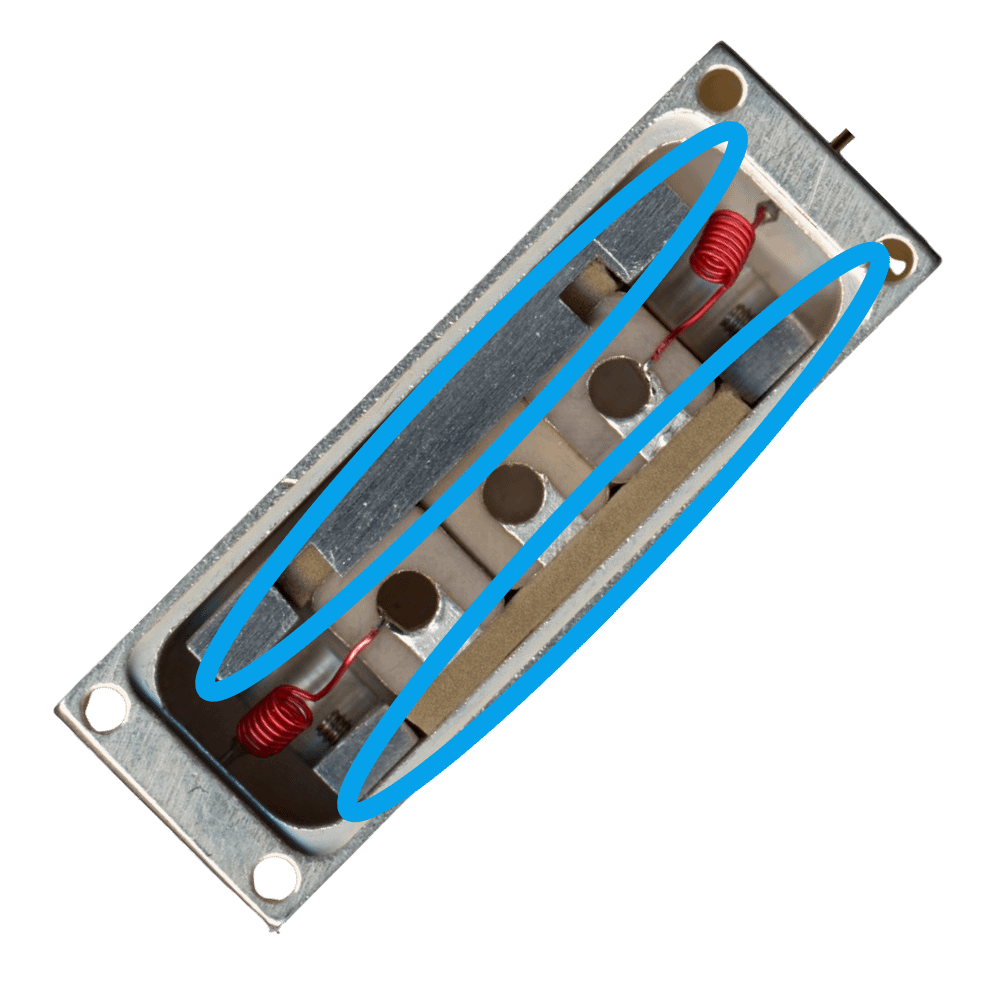
Spectrum Control bandpass filters use unique design approaches to reduce unit size, one of which is iris coupling. Iris coupling transfers electromagnetic energy between adjacent cavities through precisely shaped apertures in the cavity walls. These apertures behave as reactive shunt inductances or capacitances, increasing coupling between resonators and shaping the overall filter response. |
|
Spectrum Control bandpass filters incorporate temperature-stabilizing elastomers for harsh environments, helping meet demanding shock and vibration requirements. These elastomers absorb kinetic energy through hysteresis, reducing stress and damping resonant peaks that could otherwise damage the assembly. They also provide compliant support that cushions movement without compromising electrical contact, maintaining low temperature drift performance. |
 |
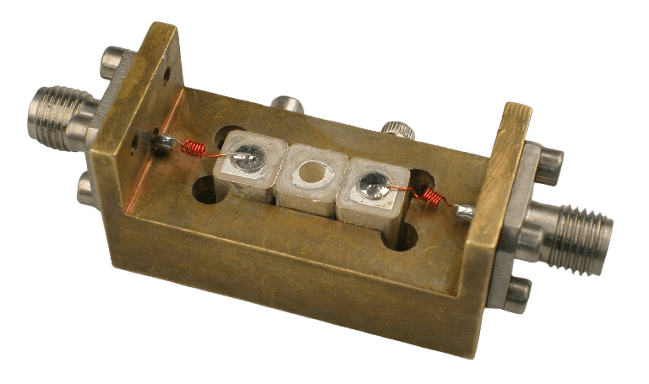 |
Spectrum Control offers the same ceramic bandpass filter in both SMA connectorized and SMT formats for bench testing or production use. This 3-pole design provides a balanced combination of compact size and high selectivity. |
|
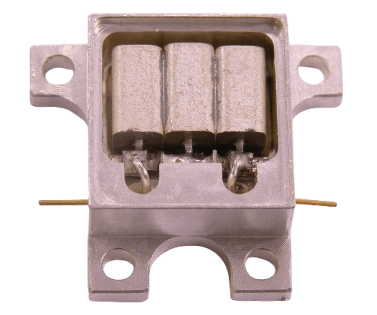
Spectrum Control laser-welds select bandpass filters to provide leakage protection in crowded PCB environments. This process helps isolate against electromagnetic coupling and prevents RF energy from escaping the package and affecting nearby channels. In designs like this 3-pole ceramic bandpass filter, laser welding contains the signal within the cavity and protects resonators from moisture, preserving center frequency and minimizing insertion loss. |
 |