

Long RF cable runs introduce increasing attenuation as frequency rises, degrading gain flatness and overall system performance. Spectrum Control's Negative Slope Cable Equalizers provide passive cable loss compensation that restores a flatter frequency response across broadband RF and microwave systems.
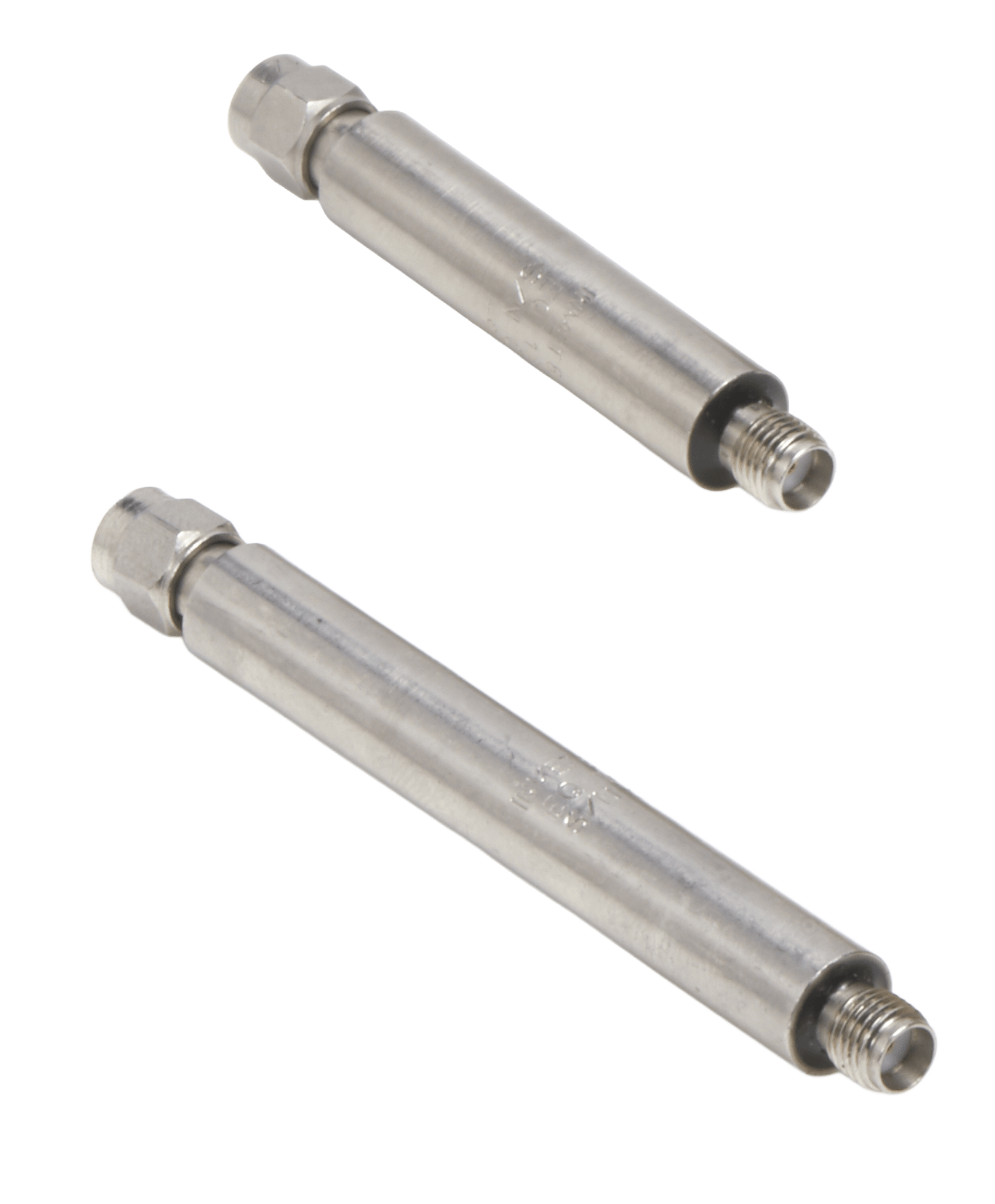
Spectrum Control's Negative Slope Equalizers compensate for frequency-dependent cable loss, helping maintain a consistent signal level across the operating band. Designed for broadband RF and microwave systems, they improve overall system performance without requiring active gain compensation.
How it Works
As cable attenuation increases with frequency, the equalizer provides an inverse response that offsets the loss, resulting in a nearly flat overall system response.
Why it Matters
Cable losses become more pronounced at higher frequencies, especially in long RF cable assemblies. Negative slope equalizers compensate for this frequency-dependent loss, reducing gain variation without active circuitry.
Understanding the Response
-
Cable: Increasing attenuation with frequency.
-
Equalizer: Inverse attenuation profile designed to offset cable loss.
-
Equalized Signal: Combined response with significantly reduced amplitude variation.
Choose from a range of fixed negative slope equalizers optimized for different frequency bands, slope values, and connector configurations.
Model |
Delta Slope |
Freq. Range (GHz) |
Max. Power (Watts) |
Connector Type |
Configurations |
| General Purpose | |||||
| EQ2301 | 3-35 dB | 0.5-18 | 1 | SMA | M/F, F/F, M/M |
| Precision Bands | |||||
| EQ2400 | 3-25 dB | 6-18 | 1 | SMA | M/F, F/F, M/M |
| EQ2401 | 2-20 dB | 8-18 | 1 | SMA | M/F, F/F, M/M |
| High Slope | |||||
| EQ1251 | 2-35 dB | 2-18 | 1 | SMA | M/F, F/F, M/M |
| Low Frequency | |||||
| EQ1100 | 2-15 dB | 0.5-2 | 2 | SMA | M/F, F/F, M/M |
| EQ1101 | 3-15 dB | 0.5-4 | 2 | SMA | M/F, F/F, M/M |
| EQ1102 | 3-15 dB | 2-8 | 2 | SMA | M/F, F/F, M/M |
| EQ1103 | 3-10 dB | 4-8 | 2 | SMA | M/F, F/F, M/M |
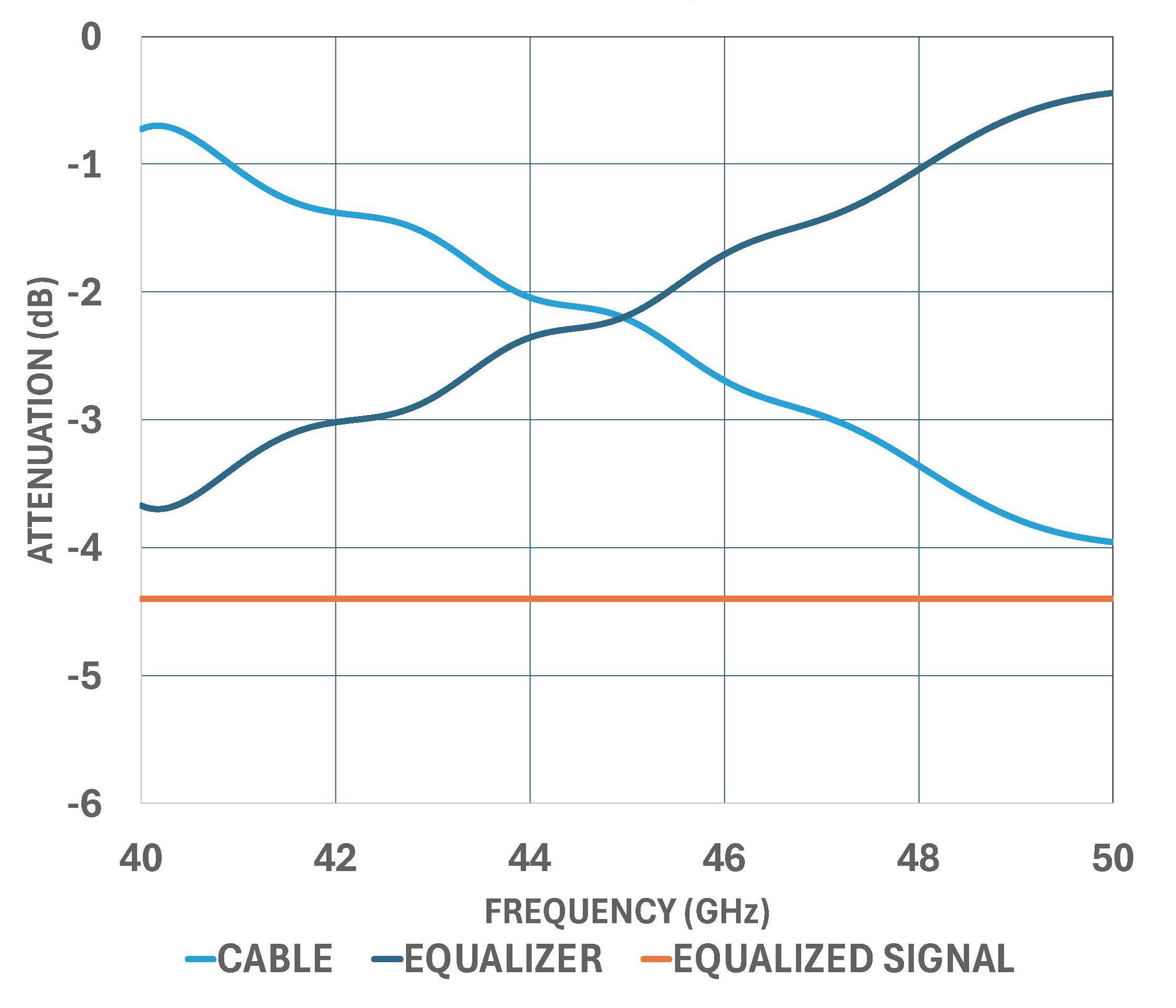
As cable attenuation increases with frequency, the equalizer introduces a complementary loss profile that restores a flatter overall system response.
Typical Applications
-
RF test and measurement
-
Radar systems
-
Electronic warfare (EW)
-
SATCOM
-
Aerospace and defense
-
Long cable assemblies
-
Wireless infrastructure
-
Broadband communications
Why Choose Spectrum Control?
-
Compensates for frequency-dependent cable loss
-
Flattens overall system gain response
-
Optimized for broadband RF and microwave systems
-
Multiple slope values for precise matching
-
Passive operation with no external power
-
Low insertion loss and excellent VSWR
-
Compact, drop-in design
-
Custom equalization solutions available
Need a Custom Equalizer?
Tell us about your equalizer requirements, and our team will help identify the right solution.