
PRODUCTS / COMPONENTS / FILTERS
High Q SMT Filter Family
Spectrum Control is a leading manufacturer of bandpass filters for the industry’s most demanding applications. Spectrum engineers have introduced a breakthrough in bandpass filter technology with new glass-based designs. This high-Q topology delivers significant size reduction while achieving ultra-high rejection and low insertion loss. These filters provide over 65 dB rejection with less than 2 dB insertion loss, covering frequencies up to 10 GHz.
Overview
Spectrum Control has been a leader in high-quality, high-performance RF bandpass filters for more than 40 years. We have leveraged our expertise to deliver significant size reduction while maintaining exceptional performance. The new glass filter family offers high selectivity, low insertion loss, and strong temperature stability in an ultra-miniature package.
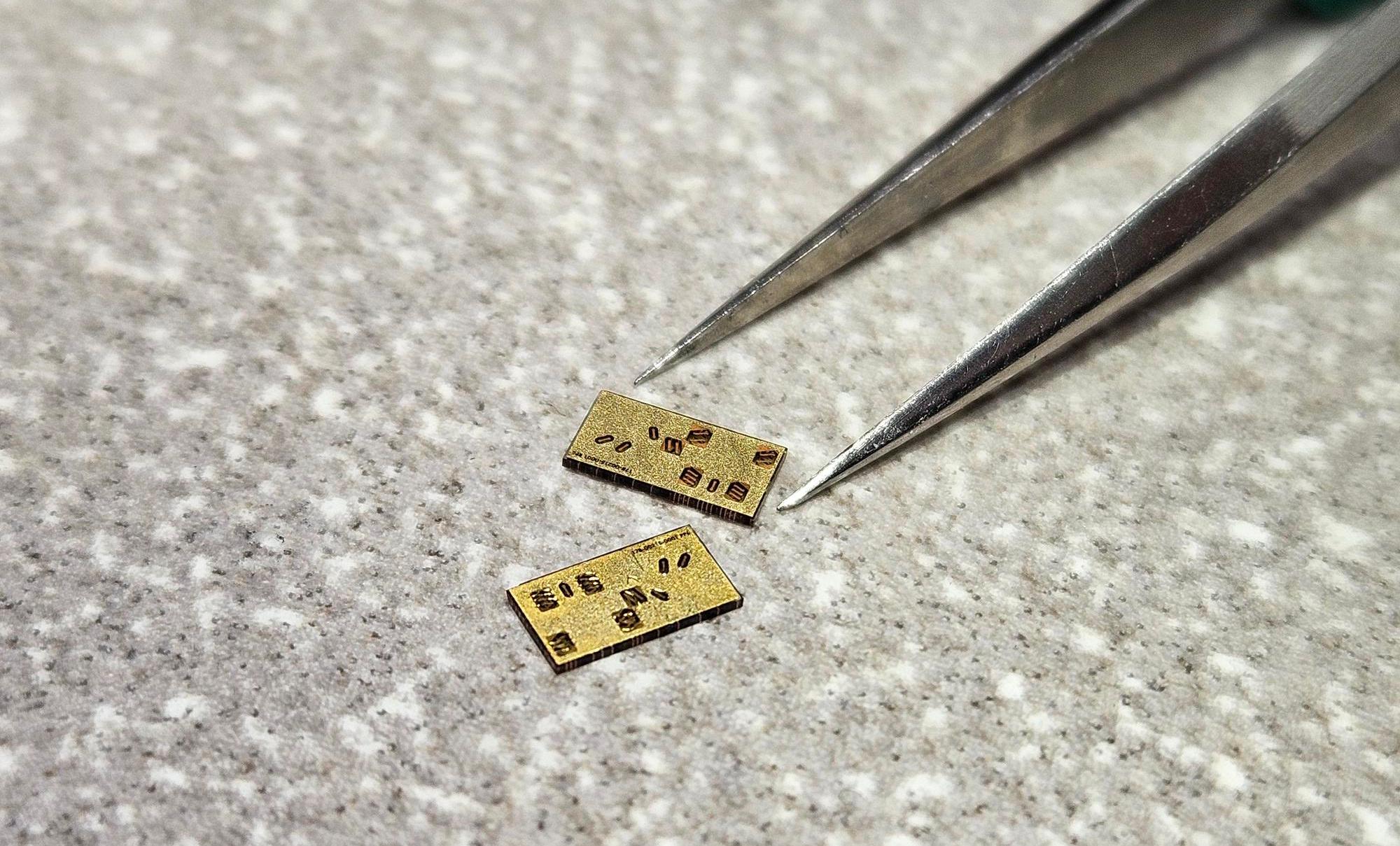
Spectrum Control engineers have developed a novel glass-based topology that integrates passive elements within layered structures. This advanced approach enables the creation of unique solenoid inductor designs that deliver ultra-high Q performance, particularly across the 500 MHz to 10 GHz frequency range. By embedding these elements within the glass substrate, the design achieves improved stability, reduced parasitics, and enhanced electrical performance. These ultra-miniature filters can significantly reduce the size of traditional lumped-element designs while maintaining high selectivity and low insertion loss.
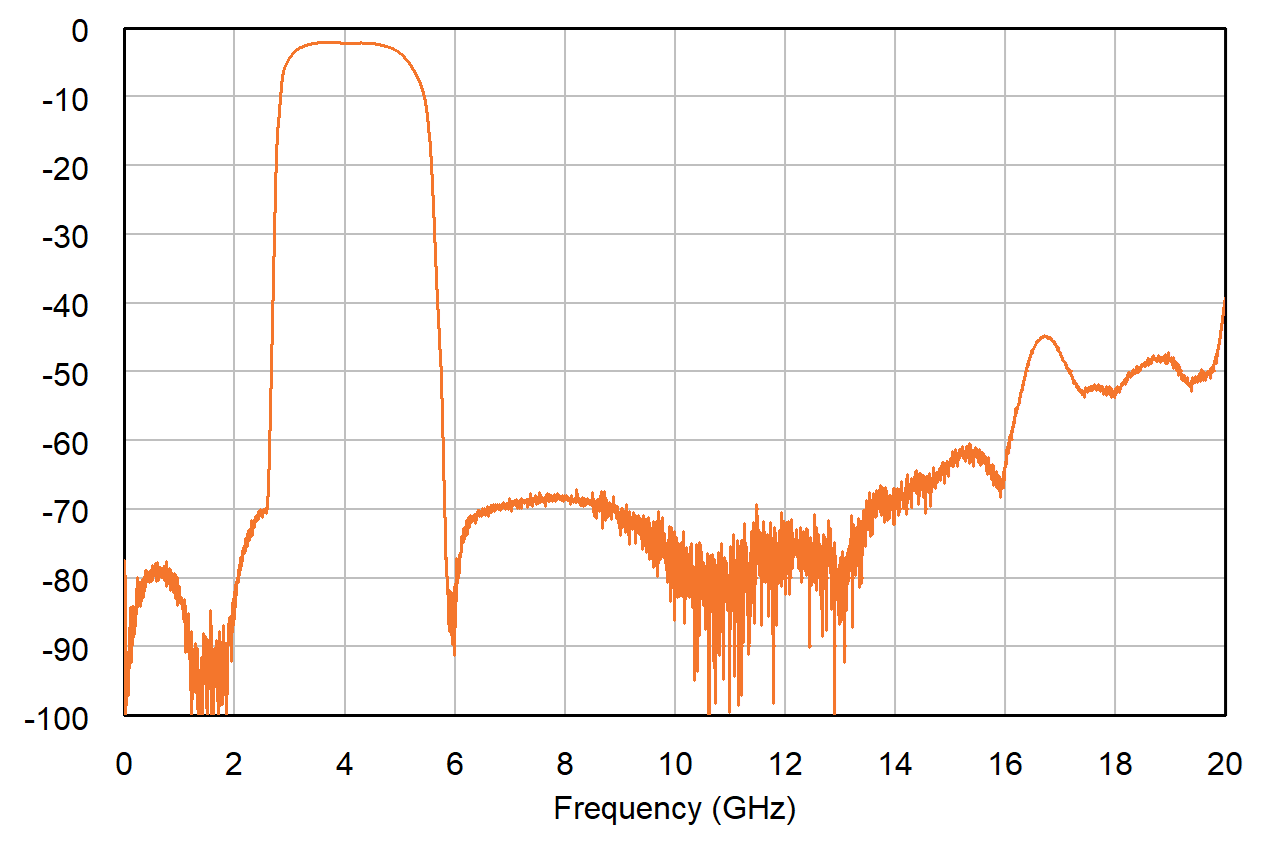
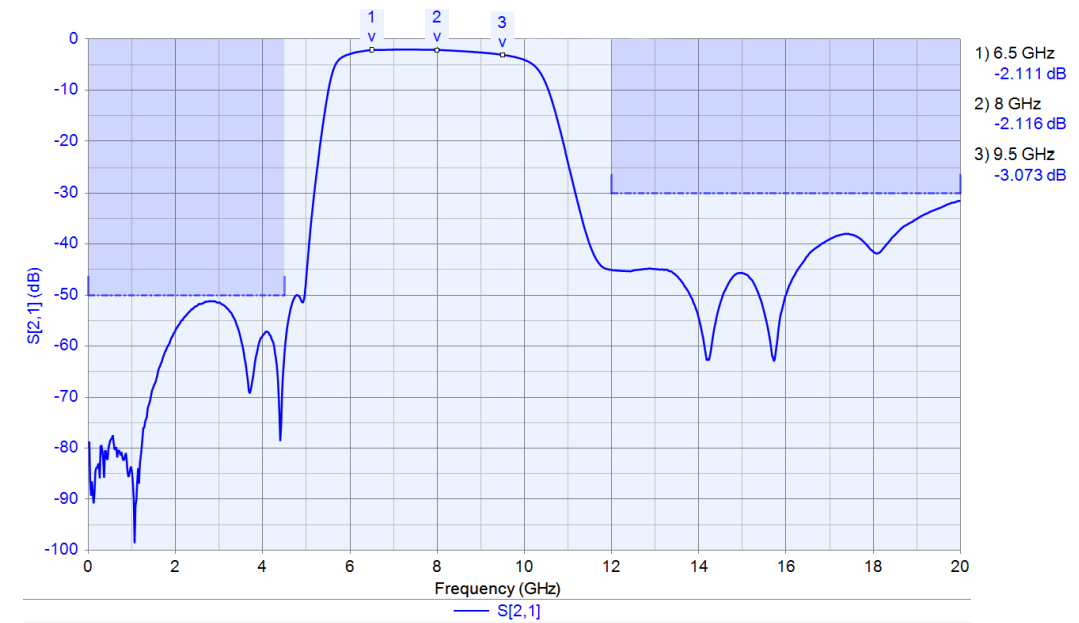
This performance graph is typical for all of the filters in the MMG family with steep skirt selectivity and very low insertion loss
Performance
Featured release: 4 GHz IF filter
- Pass-band from 3 to 5 GHz
- Mid-band insertion loss of 2.2 dB
- Group delay of 1.0 ns nominal over a temperature range of -55° C to 125° C
- Stop-band suppression greater than 60 dBc from DC - 2.5 GHz and 5.8 to 15 GHz, typical 15% from the band edges
Standard product family for lowpass, highpass, bandpass, notch and diplexer applications covers frequency bands from 0.5 GHz to 10 GHz. Download the family datasheet for more information
Custom derivatives available including multiplexers and switched filter banks. Please use the form below to inquire or contact your local Spectrum Control sales office.
The proprietary top-side metallization layer enables reliable bonding while supporting high current flow. |
Metallization 1 |
| A thin layer of silicon nitride serves as both a dielectric and an insulator. |
Silicon Nitride |
| A secondary proprietary metallization layer serves as the signal routing layer, completing the bandpass circuit. |
Metallization 2 |
| This Alumina compound layer is used due to its stability low loss characteristics and low CTE. |
Glass |
| This proprietary back metallization layer adds rigidity for the alumina derivative layer above it. |
Back Metallization |
| The adhesive layer bonds the alumina assembly to the copper ground-plane backside metallization. |
Adhesive |
| This copper layer acts as a heat sink, evenly distributing thermal energy to the PCB interface. |
Copper |
Featured Design: 4 GHz IF filter
|
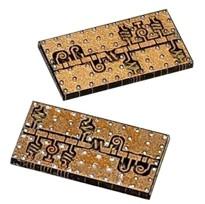 |
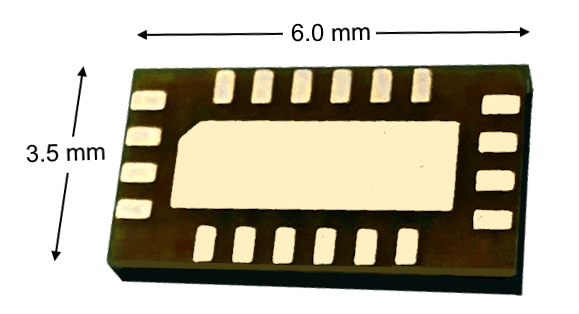
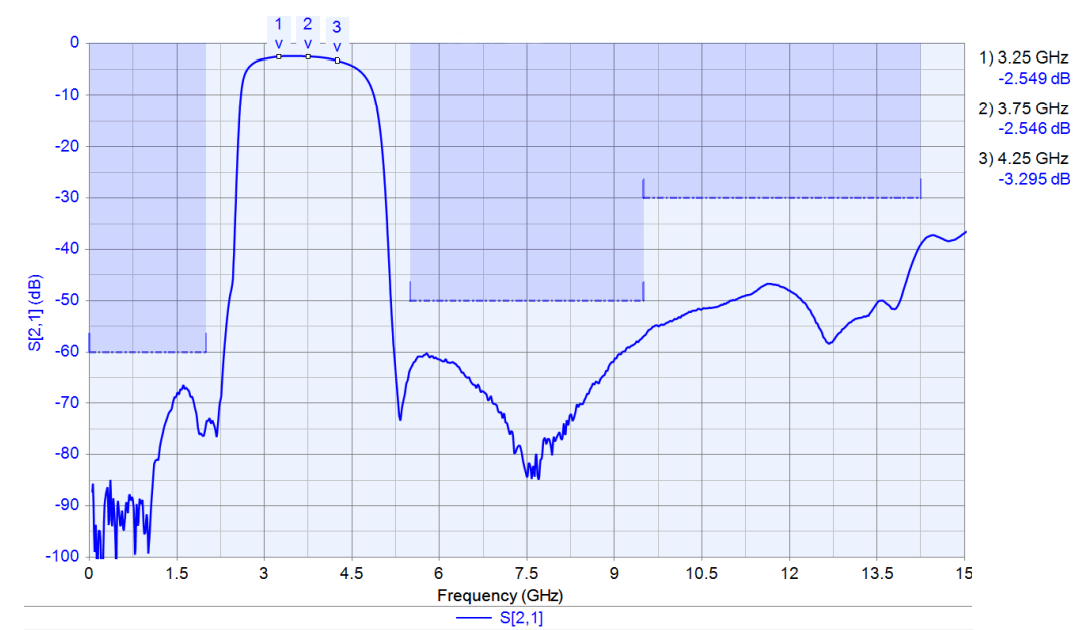
This MMG-001 glass bandpass filter offers low insertion loss with over 65 dB of rejection and can handle up to 1 watt of incident RF power. This 50-ohm design maintains performance across temperature extremes from -55°C to +100°C.
| Parameter | Min Freq (GHz) | Max Freq (GHz) | Min | Typ | Max | Unit |
| Passband Insertion Loss | 3.25 | 4.25 | 2.0 | 2.5 | 4.0 | dB |
| Passband Return Loss | 3.25 | 4.25 | 12 | 15 | dB | |
| Stopband Attenuation | 0 | 2.0 | 60 | 65 | dB | |
| Stopband Attenuation | 5.5 | 9.5 | 50 | 60 | dB | |
| Stopband Attenuation | 9.5 | 14.25 | 30 | 40 | dB | |
| Group Delay | 1 | nS | ||||
| Power Handling | 30 | dBm | ||||
| Impedance | 50 | Ω | ||||
| Temperature | -55 | 25 | 100 | ˚C |
Featured Design: 4 GHz IF filter
|
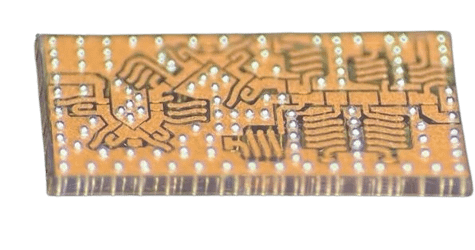 |
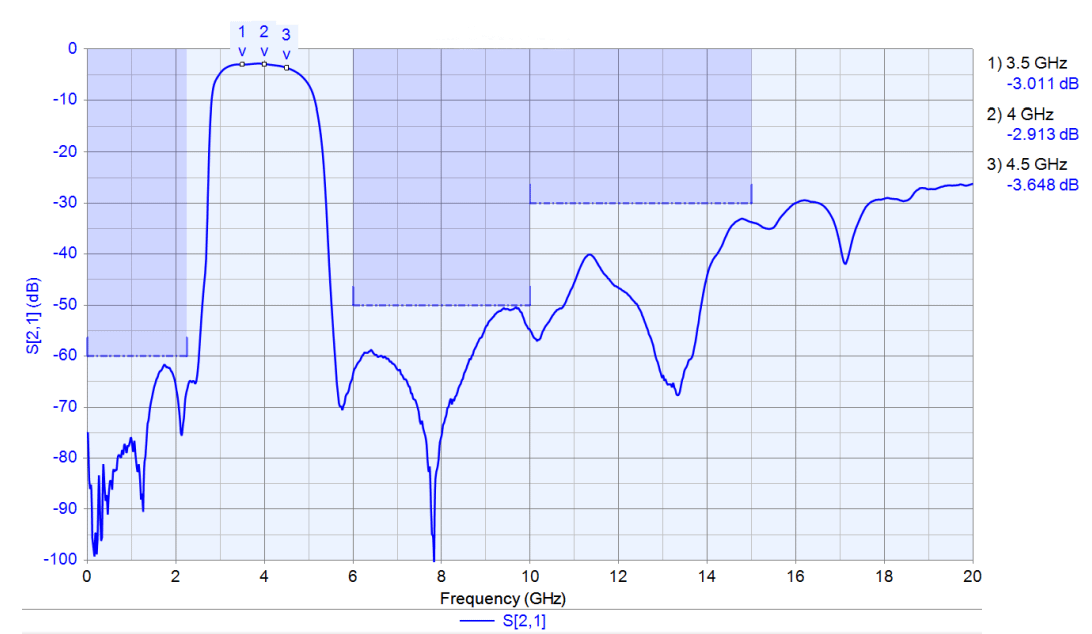
The MMG-007 glass bandpass filter offers low insertion loss with over 65 dB of rejection and can handle up to 1 watt of incident RF power. This 50-ohm design maintains performance across temperature extremes from -55°C to +100°C.
| Parameter | Min Freq (GHz) | Max Freq (GHz) | Min | Typ | Max | Unit |
| Passband Insertion Loss | 3.5 | 4.5 | 2.0 | 2.5 | 4.0 | dB |
| Passband Return Loss | 3.5 | 4.5 | 12 | 15 | dB | |
| Stopband Attenuation | 0 | 2.25 | 60 | 65 | dB | |
| Stopband Attenuation | 6 | 10 | 50 | 60 | dB | |
| Stopband Attenuation | 10 | 15 | 30 | 40 | dB | |
| Group Delay | 1 | nS | ||||
| Power Handling | 30 | dBm | ||||
| Impedance | 50 | Ω | ||||
| Temperature | -55 | 25 | 100 | ˚C |
Featured Design: 4.24 GHz IF filter
|
|
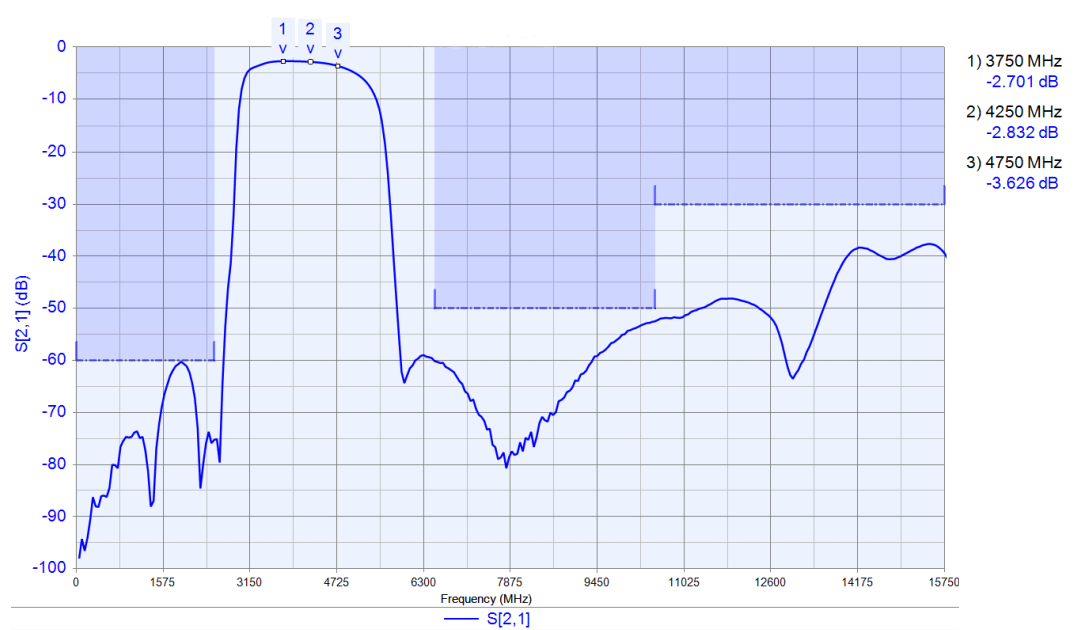
The MMG-019 glass bandpass filter offers low insertion loss with over 65 dB of rejection and can handle up to 1 watt of incident RF power. This 50-ohm design maintains performance across temperature extremes from -55°C to +100°C.
| Parameter | Min Freq (GHz) | Max Freq (GHz) | Min | Typ | Max | Unit |
| Passband Insertion Loss | 3.75 | 4.75 | 2.0 | 2.5 | 4.0 | dB |
| Passband Return Loss | 3.75 | 4.75 | 12 | 15 | dB | |
| Stopband Attenuation | 0 | 2.0 | 60 | dB | ||
| Stopband Attenuation | 6.5 | 10.5 | 50 | 55 | dB | |
| Stopband Attenuation | 10.5 | 15.75 | 30 | 40 | dB | |
| Group Delay | 0.8 | 1 | 2 | nS | ||
| Power Handling | 30 | dBm | ||||
| Impedance | 50 | Ω | ||||
| Temperature | -55 | 25 | 100 | ˚C |
Featured Design: 8 GHz IF filter
|
|
The MMG-020 glass bandpass filter offers low insertion loss with over 65 dB of rejection and can handle up to 1 watt of incident RF power. This 50-ohm design maintains performance across temperature extremes from -55°C to +100°C.
| Parameter | Min Freq (GHz) | Max Freq (GHz) | Min | Typ | Max | Unit |
| Passband Insertion Loss | 6.5 | 9.5 | 1.5 | 2.0 | 3.5 | dB |
| Passband Return Loss | 6.5 | 9.5 | 12 | 15 | dB | |
| Stopband Attenuation | 0 | 4.5 | 46 | 55 | dB | |
| Stopband Attenuation | 12 | 20 | 30 | 35 | dB | |
| Group Delay | 0.8 | 1 | 2 | nS | ||
| Power Handling | 30 | dBm | ||||
| Impedance | 50 | Ω | ||||
| Temperature | -55 | 25 | 100 | ˚C |
Want to learn more?
Complete the form to connect with one of our experts to discuss your requirements or to get full technical specifications.